- 1
- 1
- 1
- 1
- 1
- 1
- 1

- Moshi - Arusha Road, Sanawari - Arusha.
- Mon to Sun: 8.00 am - 7.00 pm

The mighty Ruaha, and what an area! Rivers, Mountains, plains, rock kopjes, swamps, dense woodlands, and open savannahs spread out across an immense landscape that has barely been touched by man. Wooded hillside, many with rounded granite outcrops and scatterings of huge baobab, are dissected by sandy, rock-strewn seasonal rivers and streams running down to meet flood plains and seasonal swamps, many of which end up in the great Ruaha River.
Seasonal rivers are lined by scattered groves of palms, thorn trees, fig trees and sausage trees providing mid-day shade for all sorts of wild animals. They are key features to enjoy during game drives, especially during the dry season when only pools remain, or the elephants have to dig in the sand for water. This is Africa of a bygone era, the world as it was before modern man.
The only perennial river is the Great Ruaha River, which flows along the southeast boundary, but even this becomes only a trickle in place at the end of the dry season in October.
Wildlife.
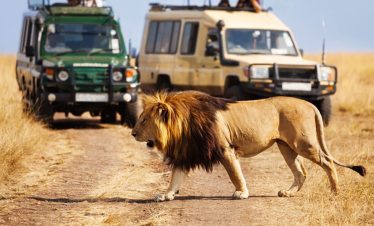
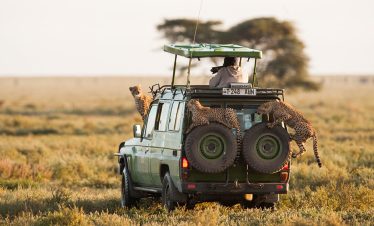
Wildlife is especially varied because of the overlap of eastern and southern Africa wildlife zones, so besides regular big game such as elephants, buffaloes, and plains animals, the more unusual species such as the antelopes like sable, roan, greater and lesser kudu are quite common and wild dogs are often encountered. Ruah is a great place for the big cats, lion, leopard and cheetah.
Birdlife is also understandably rich. In fact, outstandingly so, with over 550 species having been recorded, and an enormous variety of birds of prey. Perhaps the most abiding joy of Ruaha is the wild character of the land within which so many animals roam. It is a land of starry nights, cool morning and baking mid-day heat. A land of monumental storms during the rainy season and desiccating winds during the dry season. This is Africa that sets its mood on you and from which it is turf to turn away, and one that you never forget. This is so worth the long journey to get here, be it by air or road.
Activities.
Accommodation.
There are a number of lodges and permanent tented camps on the southern part of the park and some outside park boundaries.
Getting there.
There are scheduled flights into the park, mainly from Arusha and Dar es Salaam, and the main airstrips are Msembe and Jongomero.
Driving from Dar es Salaam is about 625 kilometres, and the park is passable throughout the year.
Ruaha can easily be combined with Mikumi, Nyerere, and Uduzungwa national park to set a tune for an African safari, while Katavi big game viewing, which is off the beaten track, the wild remote of Mahale Mountains and the famous northern circuit can be combined very well with Ruaha in most safari itineraries.