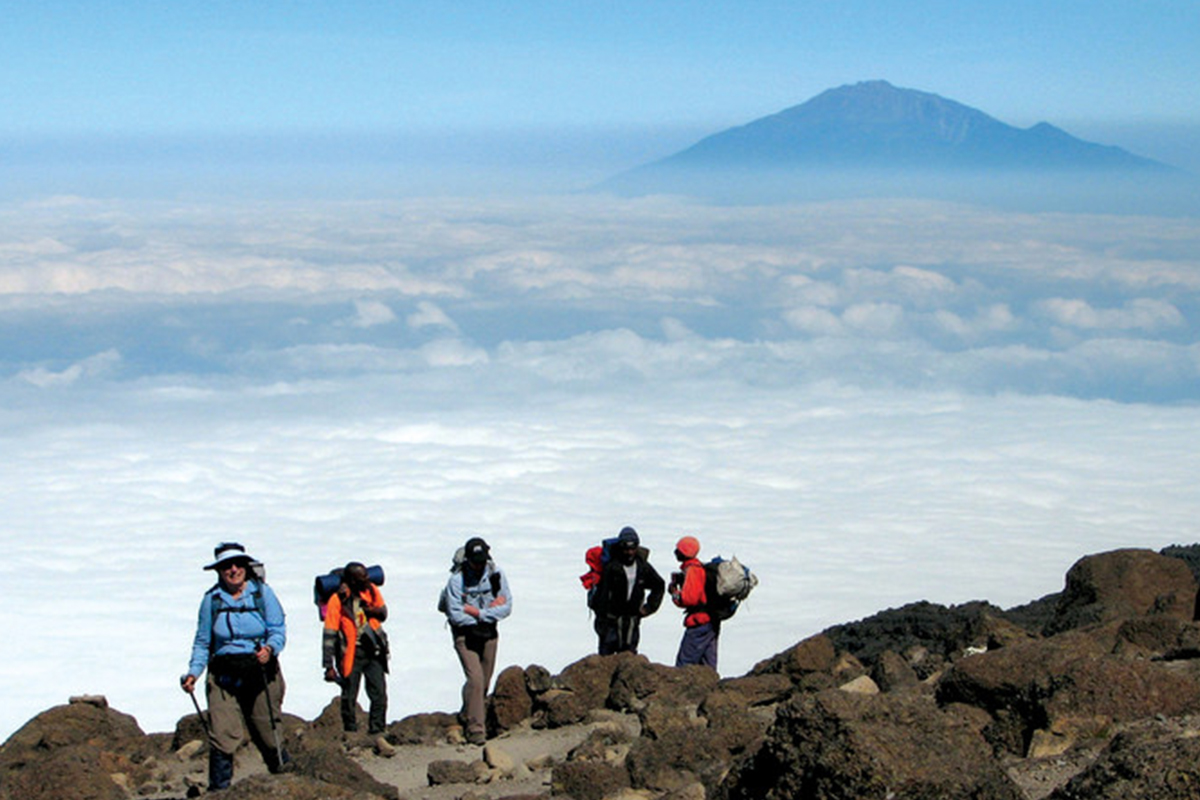
A Once-in-a-Lifetime Journey to the Roof of AfricaMount Kilimanjaro Trekking
The world’s most mesmerizing mountain, “Kilimanjaro” is beautifully covered with snow heaps and massive rocks. It is the roof of Africa settled at the heart of Tanzania, looming the floating white cloud. Mount Kilimanjaro is also popular around the globe as the tallest free-standing mountain which offers every layman to trek on it. From the bottom of the sea to the top of clouds, the total height of this mountain is 19,320 feet. For several years hundred thousand people have been trying to Climb Kilimanjaro and nearly 97% of them have made it happen. As a benefit climbers can enjoy Kilimanjaro Wildlife at the same time while trekking.
This massive giant is having 7 diverse routes with 5 different environments that support numerous challenging lives on it. You may have read before about the 7 Kilimanjaro Routes and challenges, so we haven’t mentioned it. Here we will discuss the unbelievable different layers and ecosystems of Mount Kilimanjaro.
Five eco-climatic zones take you to the equivalent of a trip from the equator to the arctic in a brief tour. As one climb Kilimanjaro, vegetation and weather change in response to the changing elevation
Cultivated Zone.
Rain Forest.
Heath / Moorland Zone.
Alpine Desert.
Arctic Region.